
Sitting with Grief: How to Start Healing

Grief can feel like the heaviest thing in the world. It’s a strange companion—one that often shows up uninvited, changes how we see the world, and leaves us feeling like we’re not quite ourselves anymore. It’s not just about death either. Grief stems from any major change or loss, whether that be a person, a job, a dream, or even the sense of security we once had.
The Grief Recovery Method teaches us something radical—something that seems almost unbelievable until you experience it: you don’t have to live with the pain of grief forever.
This approach to healing doesn’t minimize grief or suggest we “move on.” Quite the opposite. It emphasizes the importance of leaning in. Of existing in those painful emotions. Of getting honest with ourselves about what we’re really carrying.
Grief isn’t just sadness—it’s a bundle of conflicting emotions. Relief and guilt. Anger and love. Gratitude and regret. These are normal. But when we avoid feeling them, when we tuck them away because “it’s too much,” we stall our healing. That pain? It lingers. And it grows.
I mentioned in my previous post that we've been given the wrong tools to handle grief. We're often taught to avoid it or - even worse - not to feel what comes naturally to our hearts. I also said I'd touch on what the right tools are.
What makes grief so potent is that it’s about relationships. Not just with people, but with jobs, money, food, dreams, communities—anything that has a major influence in our lives but at some point, was lost or broken. And at the core of unresolved grief is the pain of unfinished emotional business. The apology you never got to say. The thank-you that went unspoken. The moments you wish you could change. The events you wish went differently.
The pain of a loss comes from the hope that the past could be different, better, or more. More security, a better relationship, a different decision. It's about regret. It's about the loss of control over what happened and the powerlessness to change it.
If regret is about our hopes for the past, then we must come to terms with the past to heal from it.
How do we come to terms with the past? We start by sitting with it, and making a space for acceptance.
Once we accept it, we take responsibility for it and then we need to give ourselves the opportunity to say and feel everything we wish we had.
When this happens, we can see that we are not powerless. We have the ability to give ourselves closure and to free ourselves from pain.
And that’s where the work begins.
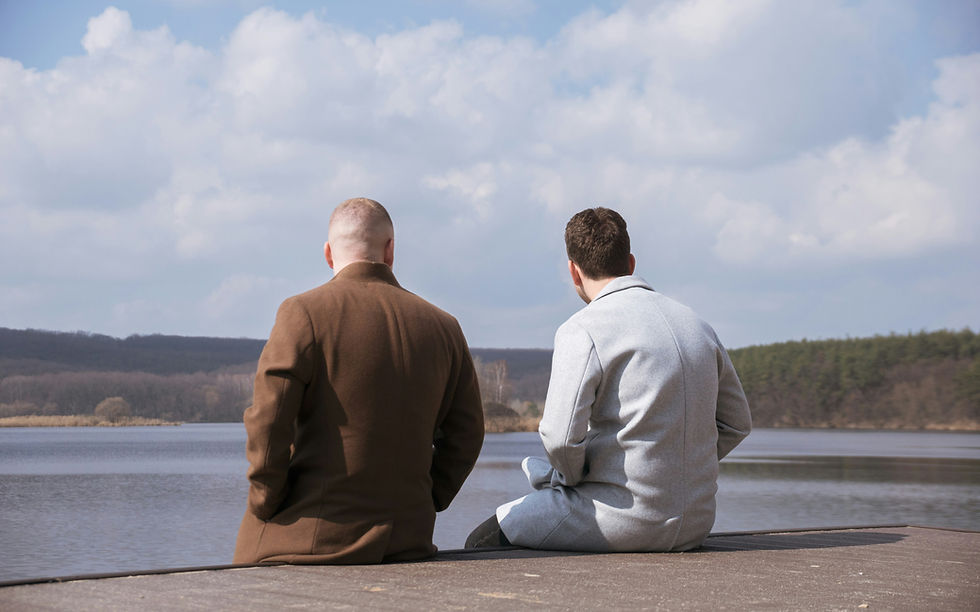
Sitting in your grief might seem like the last thing you want to do. But when we avoid it, we can’t start to understand what we’re actually grieving. We miss the opportunity to identify the specific emotions that need tending to. And without that clarity, there’s no room to resolve them. The feelings stay buried, but they’re never really gone.
But it doesn’t have to be this way.

With the right tools and support, it is possible to resolve the pain of grief. And once the pain is no longer in the way, all that remains is love. Memory. Warmth. Peace.
Some people hear this and think, “That’s not possible.” Or even, “If it doesn’t hurt, did I ever really care?”
Let me assure you—healing your grief doesn’t erase your love. It makes space for it.
It’s not easy. But it’s possible. And many people are living proof of it.
At Lean on Me, we’re spreading the word: you don’t have to suffer to grieve. You just have to be willing to show up for yourself, one step at a time.
Let us help you take that first step.
If this resonates with you, and if you believe you're ready to start healing, reach out. We're working to fill Alberta with grief support specialists so that your community can have the right tools for dealing with grief.
If you have the means, please support our mission to make grief care accessible across Alberta. Your donation will help improve others' chances for healing.
Yours,
Jes Knoop
Founder


Comments